2026-11-05 ·
Roof moss, algae and stains in Manassas: what they mean
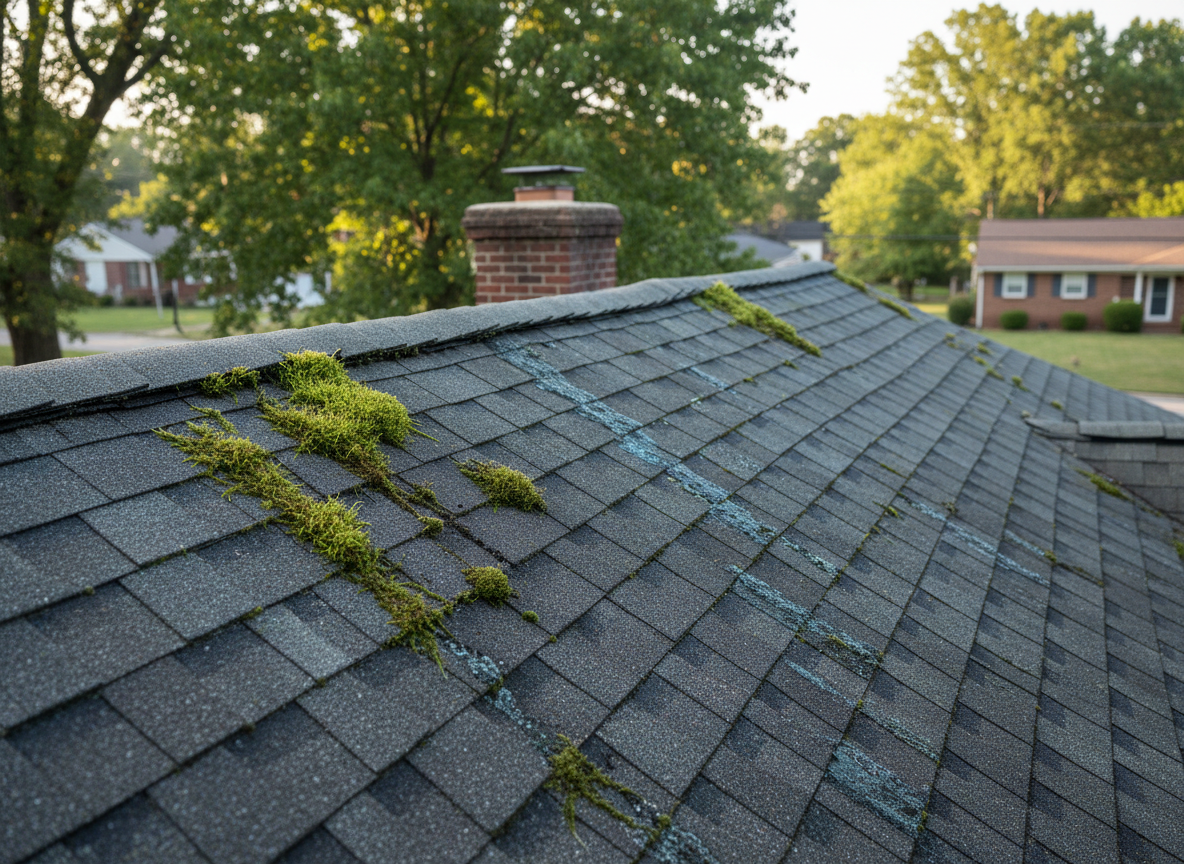
The black streaks on many Manassas roofs are not dirt. They are an algae called Gloeocapsa magma, and it feeds on the limestone filler in asphalt shingles. Moss is a different growth that holds water against the roof. Both thrive in the hot, humid summers and shaded lots common in this part of Northern Virginia.
What the black streaks are
Gloeocapsa magma spreads by airborne spores and settles on any asphalt roof that stays damp. It shows up first on the slopes that get the least sun, then runs downward in dark streaks that follow the water. The dark color is the algae's sheath, which protects it from the sun.
The streaks are mostly a looks problem at first. Over several seasons the algae pulls moisture out of the air, keeps shingles damp and can speed up granule loss. Dark streaks also absorb more heat, which can make a roof run warmer than a clean one.
What moss does
Moss is thicker and greener, and it grows in cushions along the edges of shingles, in valleys and on the shaded north slopes. In the older Manassas neighborhoods with tall trees, the north side of a roof may get direct sun for only a few hours a day. That is where moss takes hold.
Moss is the more serious growth. Its roots work under the tabs of the shingles and lift them. Lifted shingles let wind-driven rain reach the nail line and the underlayment. A mossy roof can leak at spots where there was no earlier sign of damage.
Leaves, needles and twigs from overhanging branches feed both growths. They collect in valleys and behind chimneys and stay wet for days. Gutters clogged with the same debris push water back under the first row of shingles at the eave.
Other stains that look similar
Not every dark mark is algae. Rust-colored streaks below a vent or chimney usually come from corroding metal flashing. Dark patches around vent pipes can mean a cracked boot letting water in. Dark spots that stay after cleaning, or shingles that feel soft underfoot, point to moisture trapped in the decking.
Lichen is a flat, crusty gray or green patch that grips the shingle. It is harder to remove than algae and can pull granules off with it, so it needs a gentler method.
Cleaning costs
Professional roof cleaning for algae on a Manassas roof typically runs $400 to $1,200. The price depends on roof size, pitch, how many stories the house has, how heavy the growth is and how hard the roof is to reach. A steep, two-story roof surrounded by trees costs more than a low, open ranch.
The roofer uses a soft wash with a cleaning solution, not a pressure washer. High pressure strips the granules off asphalt shingles and shortens the life of the roof. Moss is loosened first and lifted off by hand or with low pressure.
Keeping it from coming back
Zinc or copper strips installed along the ridge cost $300 to $800. Rain washes small amounts of metal down the slope, and that metal slows new algae and moss. They work best on roofs that have just been cleaned.
Trimming branches back so the roof gets more sun helps as much as any treatment. So does keeping gutters clear and leaving vents unblocked. Cleaning without fixing the shade and moisture problem means the streaks return.
When cleaning is not enough
If the shingles have lost many granules, curled at the edges or cracked, cleaning will not bring them back. A roof with that much wear is nearing replacement. Asphalt roof replacement in Northern Virginia typically runs $9,000 to $20,000, depending on size, pitch, layers and the shingle grade chosen.
Repairs for lifted shingles, damaged flashing or a failed vent boot typically run $350 to $1,500 for small jobs and $1,500 to $4,000 when decking is involved. An inspection, usually $150 to $400, shows which of these applies before any money goes into cleaning.
What to do next
Look at the roof from the ground after rain. Note which slopes have streaks, where moss sits and whether any shingles look lifted or bare. Photograph the worst areas. Then call the number on this site and the roofer will inspect the roof, tell you whether cleaning or repair is the right step and give a cost range for the job.